
Views: 0 Author: Site Editor Publish Time: 2025-12-03 Origin: Site


When it comes to formal wear, two essential pieces often create confusion: the dinner suit (or tuxedo) and the business suit. Although they may look similar at first glance, their purpose and style differ significantly. Knowing when to wear each suit can make a big difference in how you're perceived.
In this guide, we’ll explore the key differences between these two types of suits, helping you understand their unique characteristics, and when and how to wear them. You'll learn when to choose a dinner suit over a business suit, how to style each, and the common mistakes to avoid.
A dinner suit, more commonly known as a tuxedo, is designed specifically for formal evening events. It’s the go-to attire for occasions like gala dinners, weddings, and other high-profile black-tie events. Unlike a business suit, which is versatile and professional, a dinner suit is exclusive to events that require a higher level of sophistication and elegance.
Dinner suits are typically made from luxurious materials such as satin, velvet, or high-quality wool blends. The defining feature of a tuxedo is the satin or grosgrain lapels, which are a stark contrast to the rest of the suit’s fabric. Dinner suits usually come in dark shades like black or midnight blue, ensuring they stand out in evening lighting.
Trousers of a dinner suit feature a satin stripe down the side, complementing the glossy finish of the lapels. Accessories such as a bow tie, cufflinks, and a pocket square complete the formal look.
When wearing a dinner suit, pairing it with a white dress shirt with French cuffs and adding a black bow tie is essential. Ensure your shoes are polished black patent leather Oxfords or court shoes to match the formal look. Common mistakes include wearing a regular necktie instead of a bow tie, or opting for casual shoes that detract from the suit's elegant appeal. The dinner suit should never be paired with casual or everyday accessories—its formal occasion-specific design demands attention to detail.

A business suit is a versatile, professional garment typically worn for daily office settings, corporate events, and semi-formal occasions. Unlike the dinner suit, the business suit is designed to make you look polished and approachable without overshadowing the event or environment. It serves as a reliable wardrobe essential that can take you from a business meeting to a networking event and even a semi-formal wedding.
Business suits are generally crafted from durable materials like wool, wool blends, or synthetic fibers for comfort and flexibility. They come in a wide range of colors, with navy, charcoal gray, and black being the most traditional choices. A business suit typically features a single-breasted jacket with a notched lapel, though double-breasted options exist for a more formal appearance.
The trousers are usually plain and match the jacket in both color and fabric, creating a cohesive, professional look. Accessories like silk ties, cufflinks, and leather belts add the finishing touches to a business suit, but they remain understated compared to a dinner suit’s accessories.
For a polished and professional appearance, pair a business suit with a crisp, collared dress shirt and a conservative tie. Avoid overly bright colors or flashy patterns, as the business suit is meant to convey authority and competence. A well-fitted suit, whether slim-fit or tailored, can elevate the overall look and ensure you make a lasting impression at professional events.
The key difference between a dinner suit and a business suit is the fabric. Dinner suits are made from luxurious, shiny materials like satin or velvet, which enhance their evening elegance. In contrast, business suits are crafted from matte fabrics like wool or cotton, designed for durability and comfort during long hours of wear.
Color choices in both types of suits also differ significantly. While business suits stick to neutral tones like navy, charcoal, and black, a dinner suit is usually reserved for darker shades like black or midnight blue. The color of a dinner suit is designed to stand out under artificial light, while a business suit offers more flexibility and subtlety in its hues.
Patterns are another area of difference. Business suits may feature subtle patterns like pinstripes or windowpane checks, but they should always remain understated. Dinner suits, however, are typically free of patterns to maintain a clean, sophisticated appearance.
Dinner suits are defined by their satin lapels, which add a glossy finish to the jacket. A dinner suit often has a shawl collar or a peak lapel to enhance its formal appeal. On the other hand, business suits are usually finished with a notched lapel, making them look more practical and professional.
When it comes to shirts and accessories, a dinner suit requires a formal white shirt with French cuffs, paired with a black bow tie. Accessories like cufflinks, a pocket square, and a cummerbund add to the formality. A business suit, however, is often paired with a standard dress shirt and a silk tie. Business suits use more subtle accessories, such as leather belts and understated cufflinks, which keep the look professional yet approachable.
Feature | Dinner Suit (Tuxedo) | Business Suit |
Purpose | Formal evening wear for black-tie events | Versatile wear for professional settings and semi-formal gatherings |
Occasions | Weddings, galas, black-tie events | Corporate meetings, job interviews, office wear |
Fabric | Luxurious fabrics like silk or velvet | Wool or wool blends for comfort and durability |
Lapels | Satin or grosgrain lapels | Notch or peak lapels |
Trousers | Satin side stripes | Plain or subtle patterns |
Accessories | Bow tie, cufflinks, dress studs | Silk tie, cufflinks, leather belt |
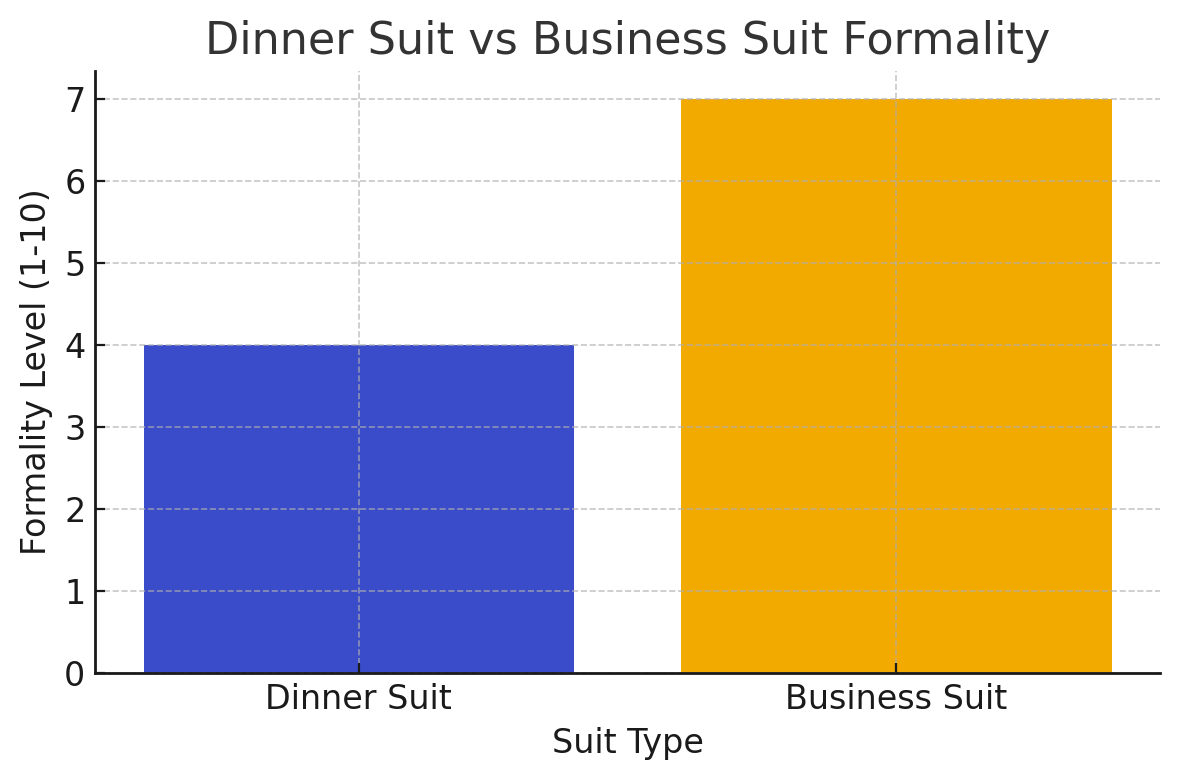
Dinner suits are reserved for formal events, particularly those with a "black-tie" dress code. These include galas, weddings (especially those held in the evening), award ceremonies, and charity balls. They are the go-to attire for any event where elegance and sophistication are required.
Business suits are appropriate for a wider variety of occasions, including corporate events, business meetings, office settings, and semi-formal gatherings. They offer a professional appearance without being overly formal, making them ideal for everyday business and work-related occasions.
It is possible to transition a business suit into a more formal look by adding certain accessories or adjusting your style. For example, pairing a business suit with a black tie and formal shoes can elevate the look for a semi-formal evening event. However, it’s important to recognize that a business suit will never achieve the level of formality required for a black-tie event, so understanding when to wear each is key.
Suit Type | Occasions |
Dinner Suit | Black-tie events, formal weddings, galas, prestigious ceremonies |
Business Suit | Corporate meetings, job interviews, office wear, semi-formal gatherings |
Understanding the dress code is crucial when choosing between a dinner suit and a business suit. Invitations to events often specify whether the dress code is black tie, business formal, or semi-formal, giving you the best clue as to which suit is appropriate. In professional settings, a business suit is always the safest choice, while a dinner suit is reserved for evening events where sophistication is expected.
The right suit should reflect your personal style while ensuring comfort for the duration of the event. If you prefer a more modern look, opt for a slim-fit business suit. If you're attending a formal evening event, a dinner suit will provide the elegance and refinement necessary for such occasions.
Regardless of the type of suit, fit is the most important element. A well-tailored suit will ensure that you look polished and feel comfortable throughout the event. Poorly fitted suits can undermine the effect, whether it’s a business suit or a dinner suit, so investing in quality tailoring is always a good idea.
One of the biggest mistakes when wearing a dinner suit is opting for the wrong accessories, such as wearing a necktie instead of a bow tie. Additionally, wearing casual shoes or neglecting to pair the suit with the appropriate formal shirt can detract from the overall look.
For business suits, avoid overdressing or underdressing based on the occasion. Wearing a business suit to a casual gathering can appear too formal, while dressing too casually for a business event can make you seem unprofessional. The key is to strike the right balance for the event.
Suit Type | Mistakes to Avoid |
Dinner Suit | Wearing a regular necktie instead of a bow tie, using casual fabrics like cotton, improper shoes (e.g., loafers) |
Business Suit | Overdressing or underdressing for workplace settings, mismatched accessories, improper fit |
The difference between a dinner suit and a business suit goes beyond appearance; it’s about knowing the right occasion. Dinner suits are for formal events, while business suits fit professional settings. Understanding when and how to wear each will help you make a lasting impression.
Investing in both types of suits ensures you're prepared for any occasion. Whether attending a black-tie event or a business meeting, a well-chosen suit will always leave a confident, stylish impression. For tailored suits, consider Dongguan Xiuyu Fashion Clothes Co., Ltd. for high-quality, versatile options.
A: A dinner suit is formal evening wear for events like galas and weddings. A business suit is more versatile, suitable for professional and semi-formal occasions.
A: No, a dinner suit is too formal for business meetings. Opt for a business suit for a professional appearance instead.
A: Business suits are perfect for corporate meetings, job interviews, and professional events. They convey confidence and professionalism.
A: Pair a dinner suit with a white dress shirt, black bow tie, and patent leather shoes for a polished black-tie look.
A: The fit is key. A well-tailored business suit ensures a sharp, professional appearance that suits various formal and semi-formal settings.


