
Views: 0 Author: Site Editor Publish Time: 2025-11-27 Origin: Site


The hoodie market is booming, and now is the perfect time to tap into this growing trend. With its versatility and constant demand, starting a hoodie business offers great opportunities.
In this guide, we will explore the key steps to launching your own hoodie business, from selecting a business model to setting up your online store. You’ll learn practical tips on how to create a successful hoodie brand that stands out in the competitive market.
The hoodie market has been expanding rapidly and is expected to continue growing. Hoodies are universally loved for their comfort, versatility, and style, appealing to various age groups, from young adults to middle-aged consumers. This increasing demand is driven by factors like the rise of casual and athleisure fashion trends, as well as the hoodie’s widespread use for sports, leisure, and even streetwear. The hoodie business offers substantial opportunities for growth, especially in niche markets such as eco-friendly or custom designs.
Starting a hoodie business has several advantages. First, it requires relatively low startup costs compared to other fashion ventures, making it an accessible option for new entrepreneurs. Hoodies also have great profit potential, especially if you focus on unique designs or offer customizations. Additionally, the demand for personalized or branded hoodies is significant, providing a steady stream of potential customers. Hoodies are easy to market, and when done right, they can be a year-round business with consistent sales.
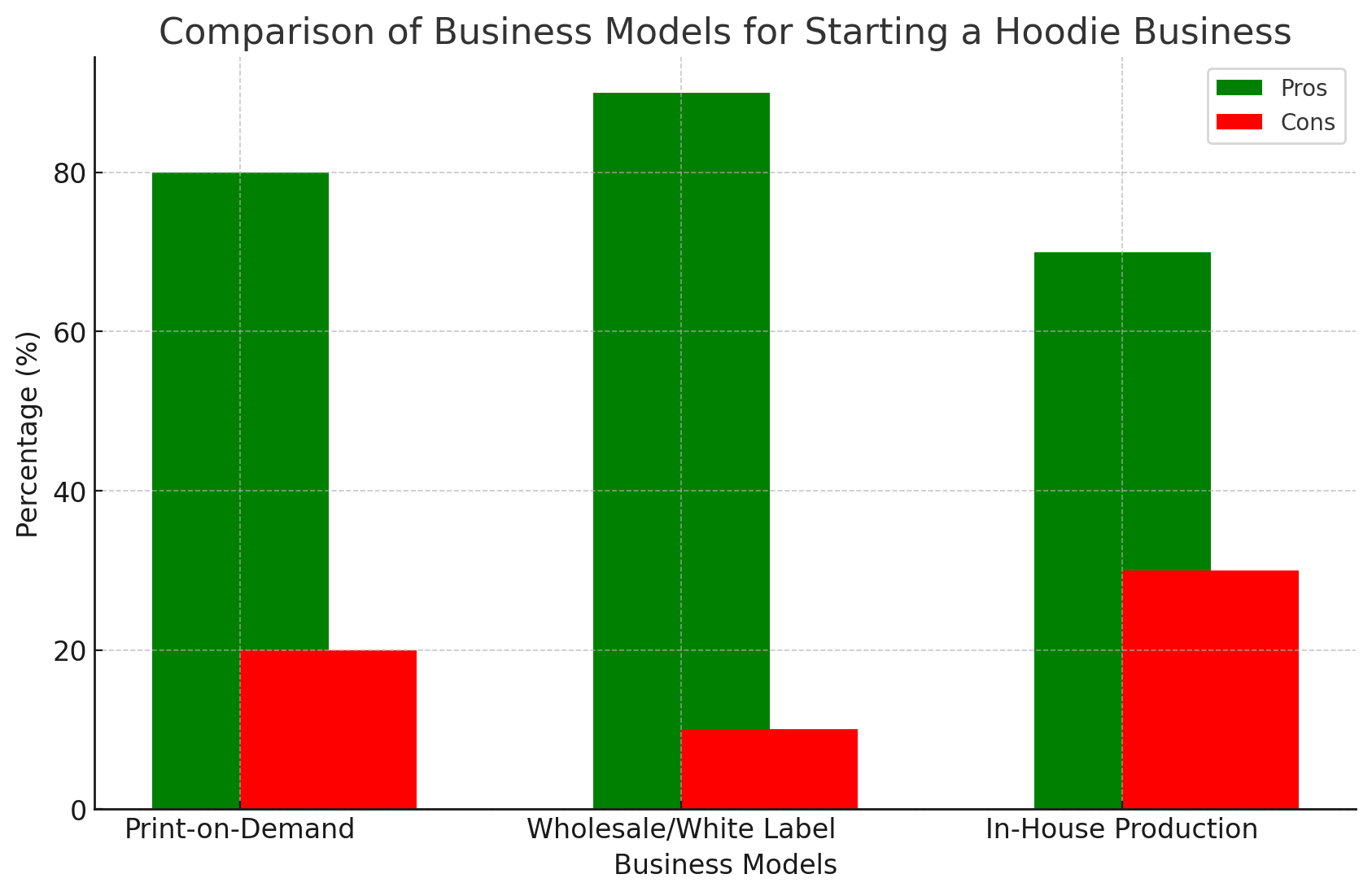
The Print-on-Demand (POD) business model is perfect for beginners as it minimizes upfront costs and reduces inventory risks. With POD, you design the hoodie, and a third-party company prints, packages, and ships the product directly to the customer. This model allows you to focus on creating your brand and promoting your designs, while the POD provider handles the logistics. However, the trade-off is lower profit margins due to the fees associated with POD services.
Wholesale and white label manufacturing involve sourcing blank hoodies in bulk and then customizing them with your designs. This method offers higher profit margins than POD, but it requires an upfront investment for the inventory. You’ll need to manage stock levels, track orders, and ensure the quality of the products. This model is best suited for those who want more control over production but are willing to invest in bulk purchases to achieve cost savings.
In-house production provides the most control over the hoodie-making process. You design, manufacture, and distribute the hoodies yourself. While this method offers complete control over quality and design, it is also the most expensive and requires significant investment in equipment, materials, and labor. However, it can be the most rewarding for entrepreneurs who want a fully personalized product line.
Business Model | Advantages | Disadvantages |
Print-on-Demand (POD) | Low upfront cost, no inventory | Lower profit margins, reliance on third-party suppliers |
Wholesale/White Label | Higher profit potential, bulk purchasing | Requires more upfront investment |
In-House Production | Full control over production | High startup costs, requires equipment and space |
Understanding your target market is crucial for any hoodie business. Define the age, lifestyle, and preferences of your ideal customer. Are you targeting eco-conscious consumers who prioritize sustainable fashion, or are you focusing on sports enthusiasts looking for comfortable workout wear? Identifying your niche will help guide your designs, pricing, and marketing efforts. Some popular hoodie niches include fitness apparel, pet lovers, eco-friendly fashion, and fandom merchandise.
It’s essential to stay up-to-date on the latest hoodie trends. Tools like Ahrefs and Semrush can help you identify what potential customers are searching for online, allowing you to tailor your hoodie designs to meet demand. Check out social media platforms, fashion blogs, and e-commerce websites to spot trending designs and materials. Researching your competition and analyzing their designs, prices, and marketing strategies can also give you valuable insights into what’s working in the market.
Creating attractive, unique hoodie designs is essential to standing out in a crowded market. If you’re not a designer, you can work with freelance designers or use design tools like Canva or Adobe Express to create professional-looking designs. Keep your designs simple at first, focusing on color schemes, logos, and overall style. Once your designs are ready, ensure they align with your brand identity, whether it’s minimalist, bold, or artistic.
The quality of your hoodies is directly tied to the materials you choose. Popular hoodie fabrics include cotton, polyester, fleece, and recycled polyester. Each fabric has different characteristics, such as softness, breathability, and durability. For high-quality hoodies, you need to find reliable suppliers who offer the fabrics, sizes, and production capabilities you need. Do thorough research and vet suppliers carefully to ensure they provide high-quality products and fair pricing.
Fabric Type | Key Benefits | Best Use Case |
Cotton Fleece | Soft, warm, breathable | Lifestyle & casual hoodies |
Cotton-Poly Blend | Durable, holds shape, cost-efficient | Wholesale & OEM programs |
Recycled Polyester | Eco-friendly, moisture-wicking | Sustainable or performance lines |
Fleece | Warm, insulating, cozy | Winter-ready and cold-weather hoodies |
When setting up your hoodie business online, you need to select the right e-commerce platform. Popular platforms like Shopify, WooCommerce, and BigCommerce make it easy to create an online store with little technical experience. These platforms offer customizable templates, secure payment options, and integration with marketing tools. Choose a platform that aligns with your budget, product range, and long-term business goals.
Once your online store is up and running, create compelling product listings that highlight the features and benefits of your hoodies. Use high-quality product photos and mockups to give customers a clear idea of what they’re purchasing. Craft detailed product descriptions that include fabric type, sizing information, and any customization options. Additionally, establish your brand identity with a unique logo, business name, and consistent messaging that reflects your values and resonates with your target audience.
Pricing your hoodies competitively is key to attracting customers while maintaining a healthy profit margin. Research the prices of similar products in the market to determine a reasonable price range. Keep in mind that prices for custom hoodies typically range from $30 to $60, depending on the quality, design, and customization options. You also need to factor in production costs, shipping, and platform fees to ensure you’re pricing your hoodies effectively.
To maximize your profit margins, offer different hoodie styles and price points to cater to a wider range of customers. Consider offering premium hoodies made with higher-end fabrics or adding custom features like embroidery or personalized prints. Bundling products or running promotions like limited-time discounts can also help increase sales volume and boost overall profitability.
Hoodie Type | Cost to Produce | Suggested Selling Price | Profit Margin |
Basic Cotton Hoodie | $20 - $30 | $30 - $40 | 50% - 70% |
Premium Fleece Hoodie | $30 - $50 | $50 - $60 | 50% - 70% |
Custom/Branded Hoodie | $40 - $60 | $60 - $80 | 50% - 70% |
Social media is one of the most powerful tools for marketing your hoodie business. Platforms like Instagram, Facebook, and Pinterest are ideal for showcasing your hoodie designs and connecting with potential customers. Post high-quality photos, behind-the-scenes content, and customer testimonials to build engagement. Collaborating with influencers in your niche can also help amplify your brand and reach a wider audience.
Building an email list is essential for growing your hoodie business. Send regular updates about new designs, promotions, and exclusive offers to keep customers engaged. Email marketing can help drive repeat purchases and nurture a loyal customer base. Offer discounts or special deals to incentivize people to sign up for your newsletter.
Paid ads on social media platforms like Facebook and Instagram can drive targeted traffic to your store. Create eye-catching ads that highlight your hoodie designs and promotions. Offering limited-time discounts, free shipping, or other incentives can create urgency and encourage customers to make a purchase.
Color | Popularity Trend | Best Use Case |
Black | Very Popular | Streetwear, Casual, Versatile |
Gray | Popular | Everyday wear, unisex, corporate merch |
Navy | Popular | Sports, Casual, Schoolwear |
White | Trending | Summer wear, minimalist designs |
Pastel Colors | Growing Trend | Fashion-forward, custom designs |
Efficient order fulfillment is crucial for customer satisfaction. Work with reliable shipping partners to ensure timely deliveries. Offer tracking options so customers can monitor their orders. Providing excellent customer service by responding quickly to inquiries and resolving issues promptly can help build trust and loyalty.
Providing excellent customer service can turn one-time buyers into repeat customers. Be responsive to inquiries, handle complaints professionally, and go above and beyond to ensure customer satisfaction. Offering personalized experiences or loyalty rewards can also help keep customers coming back.
As your hoodie business grows, consider expanding your product line. You can introduce new hoodie styles, colors, or other apparel such as t-shirts, sweatpants, or accessories. Offering a wider range of products will help you attract more customers and increase sales.
To reach more customers, consider diversifying your sales channels. In addition to your online store, you can sell your hoodies through platforms like Etsy, or at pop-up shops and local events. By expanding your reach, you increase the potential for sales and brand visibility.
Starting a hoodie business is a great way to tap into the growing fashion market. With the right approach, including a strong brand and effective marketing, success is within reach. By choosing the right production model, focusing on quality, and engaging with customers, you can create a thriving business. Dongguan Xiuyu Fashion Clothes Co., Ltd. offers high-quality hoodie manufacturing services, helping entrepreneurs bring their hoodie brands to life with exceptional craftsmanship and reliability.
A: The best model depends on your resources. Print-on-demand (POD) is great for low upfront costs, while wholesale offers higher profit margins. In-house production provides full control over quality and designs.
A: The cost varies. Starting a small hoodie business typically ranges from $1,000 to $5,000, depending on the production model and marketing strategies.
A: Research your target audience's interests, such as eco-friendly, fitness, or fandom. Understanding what appeals to your customers will help you tailor your hoodie designs effectively.
A: To price your hoodies, analyze your competitors and balance affordability with profit margins. A good range is $30–$60 for high-quality custom hoodies.
A: High-quality fabrics like cotton, polyester, or fleece are ideal for creating comfortable and durable hoodies. Select materials that align with your target market's preferences.


