
Views: 0 Author: Site Editor Publish Time: 2026-05-01 Origin: Site


Securing branded apparel often forces a frustrating choice between speed and specificity. Procurement managers and brand directors frequently debate the best production method for their merchandise. They must decide whether to print on off-the-shelf blanks or manufacture garments entirely from scratch. The right choice depends not on subjective style, but on hard procurement metrics. You must evaluate the Total Cost of Ownership (TCO), order volume, production timeline, and brand compliance requirements. Subjective preferences alone cannot dictate scalable merchandise operations. This guide breaks down the financial and operational trade-offs between these two sourcing paths. We will help you finalize a reliable apparel strategy tailored perfectly to your business needs. By understanding these core supply chain mechanics, you can optimize both your marketing budget and your brand integrity.
Ready-made shirts are optimal for tight turnarounds (7–10 days) and low quantities (under 100 units).
Fully custom T-shirts offer better unit economics at scale (500+ units) and ensure absolute brand consistency for future reorders.
Total Cost of Ownership (TCO) for apparel includes hidden factors like stock-out risks, garment lifespan, and brand dilution.
Brands do not necessarily have to choose just one; a hybrid sourcing strategy often maximizes both agility and quality.
Every apparel decision begins by understanding the underlying supply chain. The path your garment takes dictates its final cost, quality, and customization limits. Companies must distinguish between decorating an existing product and manufacturing a new one.
Ready-Made (Off-the-Shelf Blanks): These are mass-produced, standardized garments. Blank manufacturers like Gildan or Bella+Canvas produce these items in massive global facilities. Wholesalers stock millions of these blank units in regional warehouses. Local decorators then purchase these blanks. They print or embroider your brand logo onto the existing product. You accept the fabric, fit, and color exactly as the manufacturer designed it.
Custom T-Shirts (Cut-and-Sew/Made-to-Order): This process builds apparel from the yarn up. Factories do not pull existing shirts from a shelf. Instead, they source raw fabric rolls. They dye the fabric to match your exact specifications. Workers then cut the fabric panels according to your proprietary sizing charts. A high-quality Custom T-shirt allows you to dictate fabric composition, custom fits, and proprietary labeling. You control every stitch, including custom neck tags and hem tags.
The Core Trade-off: You must choose between standardized predictability and granular brand control. Ready-made blanks offer immediate availability but restrict your creative freedom. Custom manufacturing offers absolute control but demands longer lead times and higher initial commitments. Understanding this trade-off forms the foundation of smart procurement.
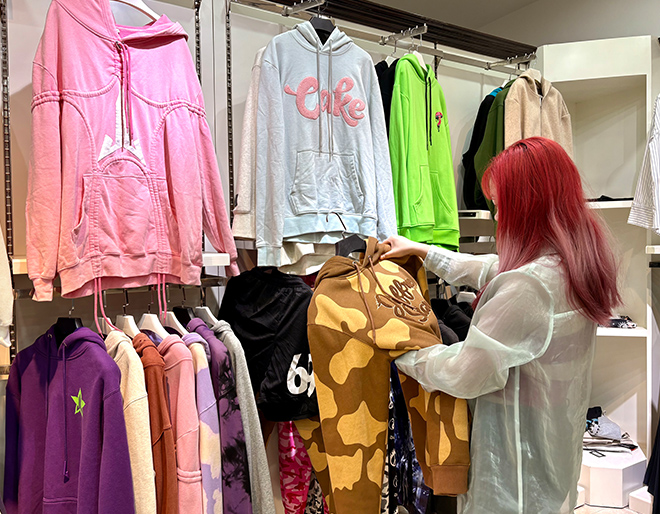
Comparing unit prices on a single invoice rarely reveals the true cost of an apparel program. Procurement professionals use Total Cost of Ownership (TCO) to measure long-term financial impact.
Ready-made blanks offer a highly accessible lower barrier to entry. They feature low-to-zero Minimum Order Quantities (MOQs). You can confidently order twenty shirts for a small team offsite. However, the unit price remains relatively static as order volumes increase. The wholesaler margins and local decorator fees limit price flexibility.
Conversely, a bespoke Custom T-shirt carries higher initial setup costs. You must pay for pattern making, tech pack development, and physical sampling. Once you absorb these initial costs, the unit price drops steeply at higher volumes. Custom manufacturing often becomes significantly cheaper per unit past 500 pieces. You bypass the wholesale markup entirely by going direct to the factory.
Many brands ignore the long-term hidden costs associated with wholesale blanks. These hidden factors often erode the initial savings of a ready-made strategy.
Discontinuation Risk: Blank manufacturers frequently retire specific colors. They often alter their fit profiles without warning. This disrupts uniform consistency for future hires. It ruins the continuity of successful merchandise restocks. You might have to switch brands entirely, angering customers who loved the previous fit.
Replacement Frequency: Standard retail blanks often suffer from faster wear-and-tear. Generic fabrics may pill quickly. Surface-level prints on standard cotton fade much faster compared to spec-ordered custom fabrics. You end up replacing employee uniforms twice a year instead of once. This dramatically increases long-term replacement costs.
Custom specifications represent true long-term value. When you develop a tech pack for your apparel, it becomes an owned brand asset. You guarantee product continuity year over year. Customers learn to trust your specific fit and fabric feel. This consistency builds brand equity. It transforms a basic promotional item into a premium retail experience.
Choosing your sourcing path requires a structured evaluation. We use a four-point framework to help brands align their procurement strategy with their operational reality.
Your calendar often dictates your sourcing method before your budget does. Time constraints ruthlessly eliminate options.
Ready-made: This method delivers incredibly fast fulfillment. A standard turnaround takes 7–10 days from artwork approval to delivery. It serves as the ideal solution for reactive event marketing. If a PR crisis or sudden viral moment requires immediate merchandise, blanks save the day.
Custom: Manufacturing from scratch demands patience. It requires a 14–21+ day lead time strictly for bulk production. You must also add at least two weeks for physical sampling and revisions. You cannot compress this timeline without risking severe quality defects.
Order volume serves as the ultimate financial tiebreaker. We categorize scalability into three distinct tiers.
Under 100 units: Ready-made represents the only financially viable option. Custom factories simply will not spin up production lines for this volume.
100–499 units: This represents the gray zone. The right choice depends heavily on your budget and design complexity. Standard prints lean toward ready-made. Complex all-over prints push you toward custom.
500+ units: Custom sourcing provides superior ROI. You gain absolute margin control. The factory direct pricing outweighs the longer lead times.
Corporate branding guidelines often dictate specific aesthetic rules. Does your brand require exact Pantone-matched fabrics? Do you need unique logo placements like wrap-around side prints or custom woven neck tapes? Local decorators cannot physically execute these demands on finished blanks. If your brand guidelines enforce rigid compliance, custom manufacturing becomes entirely mandatory.
You must match the garment quality to the end user's expectations. Internal employee giveaways easily tolerate ready-made standard fits. Trade show toss-aways rarely need premium tailoring. However, high-ticket retail merchandise demands perfection. Premium corporate gifting requires custom tailoring and exclusive fabric blends. Disappointing a high-value client with a stiff, boxy promotional shirt damages your brand reputation.
Every supply chain carries inherent risks. Anticipating these pitfalls prevents costly production disasters. Experience shows us where brands stumble most frequently.
Attempting to compress a custom manufacturing timeline always ends poorly. Factories forced to rush will skip vital Quality Assurance (QA) steps. This leads directly to poor stitching, uneven hemlines, and crooked labels. You will ultimately receive unusable inventory. Best Practice: Always build a two-week buffer into your manufacturing schedule. If your deadline remains rigid and unmoving, you must pivot immediately to ready-made blanks.
Sizing represents a massive headache for apparel managers. Ready-made sizing remains completely generic (S-XL). It varies wildly by manufacturer. A medium from one brand fits like a large from another.
Custom manufacturing solves this, but it introduces new responsibilities. It allows you to define your exact grade rules. You can create oversized streetwear fits or sharp athletic tapers. However, this requires rigorous initial sampling. Common Mistake: Approving bulk production based solely on a digital mockup. You must physically test a size run to lock in your tech pack accurately.
Modern consumers demand verifiable environmental accountability. Ready-made sourcing forces you to rely entirely on the blank manufacturer's environmental policies. You have zero control over their water usage or labor practices.
Custom manufacturing allows direct intervention. You can specifically source Global Organic Textile Standard (GOTS) certified cottons. You can request recycled polyester blends. This provides verifiable Environmental, Social, and Governance (ESG) claims for your brand. It turns your merchandise into a powerful sustainability marketing tool.
Procurement requires decisive action based on clear parameters. Review these final scenarios to determine your optimal path.
Choose Ready-Made When:
Launching an urgent promotional event within the next two weeks.
Outfitting a small local team or regional office.
Testing a brand new merchandise concept with low financial risk.
Operating under strict short-term budget constraints where unit cost matters less than total outlay.
Choose Fully Custom T-Shirts When:
Building a long-term retail merchandise line meant to generate serious revenue.
Outfitting a large enterprise workforce exceeding 500 employees.
Requiring specific brand-color matching via laboratory dye dips.
Demanding proprietary garment features like hidden pockets, specific fabric weights, or custom woven labels.
The Hybrid Approach:
Sophisticated brands do not restrict themselves to a single method. They deploy a hybrid sourcing strategy to maximize both agility and quality. Keep ready-made local suppliers on hand for immediate, low-volume needs. Use them for rapid new hire onboarding kits or spontaneous local events. Simultaneously, transition your core, high-volume apparel to a custom manufacturing pipeline. This dual approach secures better margins for bulk needs while retaining emergency flexibility.
Choosing between off-the-shelf blanks and custom manufacturing requires a logical assessment of your supply chain needs. Let your required production timeline and total order volume dictate your baseline decision. Once you establish those hard metrics, adjust your choice based on your brand compliance and quality expectations. Do not sacrifice long-term brand equity for a minor short-term convenience if your volume supports custom manufacturing. By mastering these procurement dynamics, you transform apparel from an unpredictable expense into a reliable brand asset.
Take action today to optimize your apparel supply chain. Request a comprehensive sample pack from a trusted manufacturer. Consult with an apparel supply chain expert to calculate the exact ROI threshold for your specific order volume. Finalize your tech packs now so your brand remains ready to scale efficiently.
A: The MOQ varies significantly depending on the factory and design complexity. Generally, economical viability starts at 100 to 300 pieces per style. Ordering below this threshold usually results in prohibitive setup costs, making ready-made blanks a much smarter financial choice for micro-runs.
A: Yes, many high-quality blank garments feature "tear-away tags." Local decorators can easily remove these generic manufacturer tags. They then screen-print your custom branded label directly onto the inside neck. This serves as an excellent middle-ground solution for brands wanting customization without high MOQs.
A: You should strictly add 2 to 3 weeks to your timeline just for physical sampling. This buffer allows the factory to cut, sew, and ship a prototype to your office. It also provides necessary time for you to review the fit, suggest revisions, and approve it before bulk production begins.
A: The actual printing methods (like screen printing or DTG) can be identical across both options. However, custom manufacturing allows you to select a fabric weave specifically optimized to hold ink. Choosing a tighter fabric gauge during custom production often results in a crisper, longer-lasting print.


